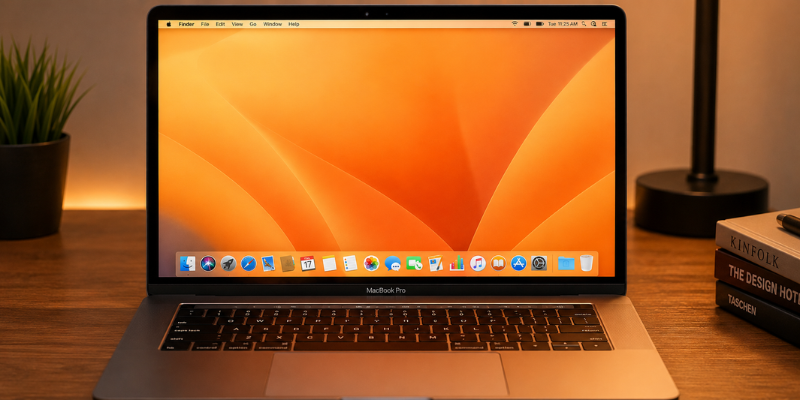

Orange discoloration MacBook Pro issues can be frustrating because they affect display quality, color accuracy, and the overall user experience. Whether the entire screen suddenly looks warm or only certain areas have developed an orange discoloration, it’s natural to wonder whether the issue is software-related or a sign of failing hardware.
The good news is that an orange discoloration MacBook Pro issue doesn’t always mean an expensive repair. Sometimes it’s caused by a simple display setting, while in other cases it may indicate a hardware problem that requires professional attention. This guide explains the most common causes, practical troubleshooting methods, and ways to prevent the issue from returning.
What Does Orange Discoloration MacBook Pro Look Like?
Orange discoloration can appear in several different ways depending on the underlying cause.
Common symptoms include:
- The entire display has a warm orange or yellow tint.
- Orange patches appear near the edges of the screen.
- Certain areas look darker than others.
- Colors no longer appear natural.
- White backgrounds appear cream, orange, or yellow.
For example, a graphic designer editing photos may suddenly notice that skin tones look overly warm, while someone watching Netflix might see white subtitles turning slightly orange.
Understanding exactly how the discoloration appears helps narrow down the cause.
Display Settings That Cause Orange Discoloration MacBook Pro
Before assuming your MacBook Pro has a hardware failure, check its display settings.
Night Shift and Orange Discoloration MacBook Pro
Night Shift intentionally reduces blue light by adding a warmer color temperature.
If enabled during the day, many users mistake it for screen damage.
To check:
- Open System Settings
- Select Displays
- Open Night Shift
- Turn it off completely
Many users solve the problem within seconds simply by disabling this feature.
True Tone and Orange Discoloration MacBook Pro
True Tone adjusts screen colors according to ambient lighting.
Although it improves viewing comfort, some users feel it makes the display appear slightly orange.
Try disabling it temporarily and compare the colors.
Color Profiles Causing Orange Discoloration MacBook Pro
A damaged or incorrect color profile can also create unusual color shifts.
Choose the default Apple display profile and restart the MacBook.
Hardware Problems Behind Orange Discoloration MacBook Pro
If settings aren’t responsible, hardware becomes the next suspect.
Display Panel Damage and Orange Discoloration MacBook Pro
Display panels naturally age over time.
After years of heavy use, color uniformity may decline, causing:
- Orange corners
- Yellow edges
- Uneven brightness
- Color inconsistency
This is more common on older MacBook Pro models.
Pressure Damage
Closing the lid with an object inside the laptop or applying pressure during transport can permanently damage display layers.
Signs include:
- Orange blotches
- Bright spots
- Permanent discoloration
- Uneven lighting
Unfortunately, physical panel damage usually requires screen replacement.
Heat Exposure
High operating temperatures over extended periods may gradually affect display components.
Using a MacBook Pro on soft surfaces like beds or blankets restricts airflow and can increase internal temperatures.
Although modern Macs manage heat well, repeated overheating isn’t ideal for long-term display health.
![Middle Image: Close-up of a MacBook Pro display showing an orange-tinted corner while a user adjusts display settings.]
Could Software Be Responsible?
Yes.
Software updates occasionally introduce temporary display bugs.
If orange discoloration appeared immediately after:
- macOS update
- graphics driver update
- beta software installation
try these steps:
- Restart the Mac.
- Update to the latest macOS version.
- Boot into Safe Mode.
- Reset NVRAM (Intel models).
- Run Apple Diagnostics.
Many display issues disappear after system updates that address graphics-related bugs.
How to Diagnose the Real Cause
A systematic approach saves both time and money.
Test an External Monitor
Connect your MacBook Pro to an external display.
If the external monitor shows normal colors while the built-in screen remains orange, the issue almost certainly lies with the laptop display itself.
If both screens display the same orange tint, software or graphics settings are more likely responsible.
Take a Screenshot
Capture a screenshot.
Open it on another device.
If the screenshot appears normal elsewhere but your MacBook still looks orange, the display hardware is likely the issue.
Use Apple Diagnostics
Apple includes built-in diagnostics that can detect certain hardware problems.
Run the diagnostic test before scheduling a repair appointment.
Practical Fixes You Can Try at Home
Several troubleshooting methods are safe and worth trying.
Restart Your Mac
It sounds simple, but temporary graphics glitches often disappear after a restart.
Update macOS
Apple regularly fixes graphics and display issues through software updates.
Always install stable releases rather than remaining on outdated versions.
Reset Display Preferences
Corrupted display settings occasionally create unusual color behavior.
Resetting preferences restores factory defaults.
Disable Accessibility Color Filters
Some accessibility options modify screen colors.
Check that no color filters are enabled accidentally.
Reduce Heat
If your Mac runs unusually hot:
- Keep vents clear.
- Use a hard surface.
- Clean dust from cooling areas.
- Avoid direct sunlight.
Lower temperatures help maintain display health over time.
When Professional Repair Is Necessary
Sometimes no software solution will fix the problem.
Consider professional repair if:
- Orange spots continue growing.
- Colors remain distorted after resetting settings.
- The display flickers.
- Cracks or pressure marks are visible.
- External monitors display correctly while the MacBook screen does not.
In these situations, replacing the display assembly is often the only permanent solution.
If your MacBook Pro is still under warranty or covered by AppleCare+, repair costs may be significantly reduced.
Tips to Prevent Future Display Problems
Good habits can extend the life of your MacBook Pro display.
Helpful practices include:
- Carry your laptop in a padded sleeve.
- Never place heavy objects on the closed lid.
- Avoid extreme heat.
- Clean the display using a microfiber cloth.
- Keep software updated.
- Don’t leave the laptop inside a hot car.
- Close the lid gently.
These small habits reduce the risk of pressure damage and premature display wear.
Frequently Asked Questions
Is orange discoloration on a MacBook Pro always a hardware issue?
No. Display settings like Night Shift, True Tone, or incorrect color profiles frequently create an orange tint. Hardware problems become more likely if the discoloration remains after changing these settings.
Can overheating permanently damage a MacBook Pro display?
Prolonged excessive heat may contribute to display aging, but modern MacBooks include thermal protections. Severe or repeated overheating can still affect display components over time.
Why is only one corner of my MacBook Pro screen orange?
Localized orange discoloration usually points to pressure damage, aging backlighting, or display panel wear rather than software settings.
Should I replace the screen immediately?
Not necessarily. Test display settings, software updates, and external monitors first. Only consider replacement after confirming the problem is hardware-related.
Will resetting macOS remove orange discoloration?
If software corruption caused the issue, resetting system settings or reinstalling macOS may help. However, physical display damage cannot be repaired through software.
Conclusion
Seeing orange discoloration on a MacBook Pro can be alarming, but the cause isn’t always serious. Simple settings like Night Shift or True Tone often explain the problem, while persistent discoloration may indicate display hardware wear or physical damage. By following a structured troubleshooting process, you can identify the root cause before spending money on repairs. If hardware failure is confirmed, seeking professional service early can prevent further complications.